Why Is “Making Merit” So Important in Thai Culture?
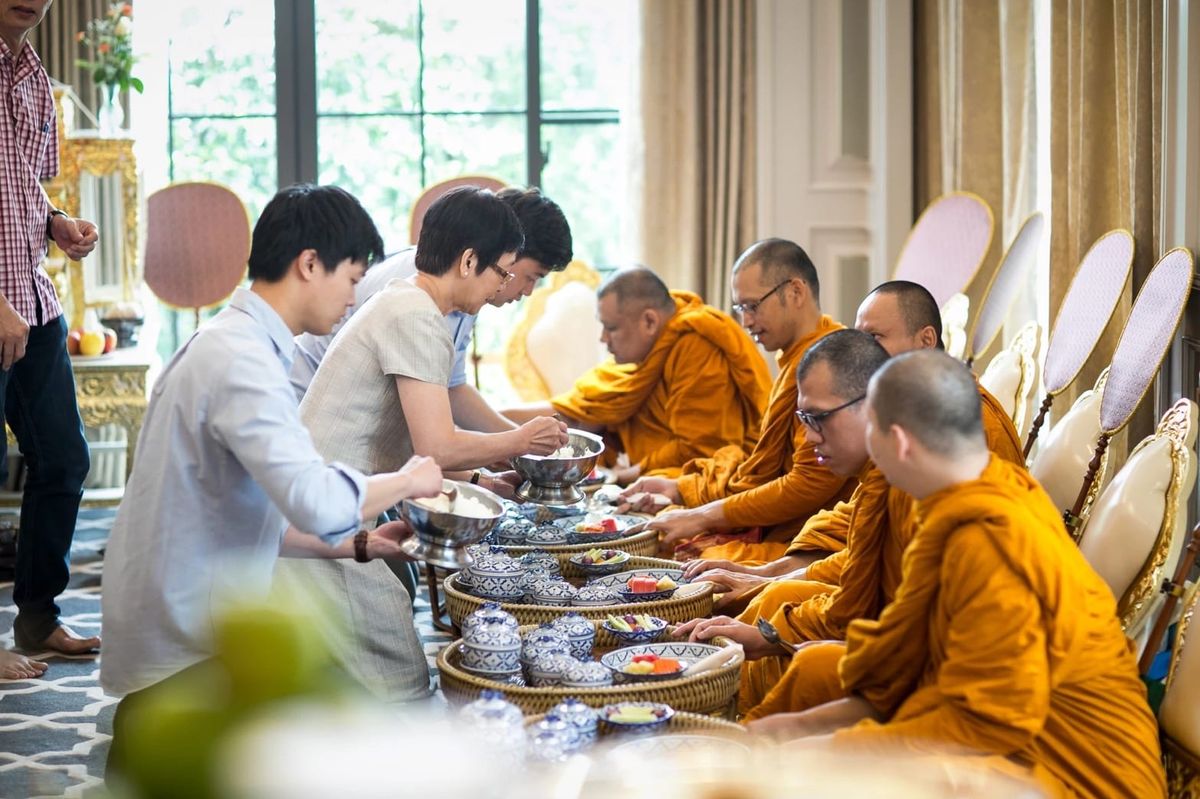
If you have spent time in Thailand, you may have noticed something special.
Early in the morning, people prepare food to offer to monks on their alms rounds. On Buddhist observance days, families visit temples to make offerings, listen to teachings, and pray.
People may also make merit on birthdays, during the New Year, when moving into a new home, before an important life event, or during difficult periods.
In Thai, this is called:
ทำบุญ — Tham Bun
It can be translated simply as “making merit” or “doing good deeds.”
But for many Thai people, making merit is not simply about asking for good luck.
It is a way of life.
🪷 What is merit? In Buddhist culture, wholesome intentions, words, and actions are understood as forms of good karma.
Giving to others, supporting monks, offering lamps, observing moral principles, listening to Buddhist teachings, caring for parents, and helping people in need can all be ways of cultivating merit.
Making merit does not always have to involve a large ceremony or an expensive offering.
Sometimes a meal offered with sincerity, a small act of kindness, or helping someone in difficulty can begin with the same wholesome intention.
What matters is not only what we give, but why we give it.
🪷 Why dedicate merit? After making merit, Thai Buddhists often place their palms together in prayer. In some ceremonies, water is poured slowly as merit is dedicated.
This does not mean “giving away” your good fortune.
Rather, it expresses the wish that the goodness created through one’s actions may also benefit parents, family members, ancestors, those who have passed away, and other beings with whom we share a connection.
The idea is no longer simply:
“I hope something good happens to me.”
It becomes:
“May the good I have done also bring benefit to others.”
🪷 Can making merit change destiny? This is one of the most common misunderstandings.
Buddhism does not teach that making one offering today guarantees wealth tomorrow, or that lighting one lamp will instantly remove every difficulty.
Traditional religious life certainly includes prayers for health, prosperity, family, and success.
But Buddhism also emphasizes cause and effect.
Good deeds plant wholesome causes.
Effort creates real-world change.
Wisdom helps us make better decisions.
Instead of seeing merit-making as a transaction, it may be more helpful to understand it as continually creating better causes and conditions in life.
🪷 Why do Thai people continue making merit throughout their lives? Because life is rarely transformed by one single action.
It is shaped by what we repeatedly think, say, and do.
Give a little today.
Help someone tomorrow.
Support a temple when you are able.
Care for your parents.
Avoid harming others.
Be grateful when life is going well.
These may seem like small things, but Buddhist practice is often built from many small wholesome actions accumulated over time.
Like drops of water eventually filling a vessel.
That is why many Thai people do not make merit only when they are in trouble.
They make merit on birthdays.
They make merit during the New Year.
They make merit when business is going well.
They make merit when their families are healthy.
In difficult times, they pray.
In good times, they give thanks.
This is perhaps one of the most meaningful ways to understand ทำบุญ.
🪷 Making merit is not a bargain with destiny. It is a way of continually planting better causes in our lives.