Why Is Lineage So Important in Thai Traditional Culture?
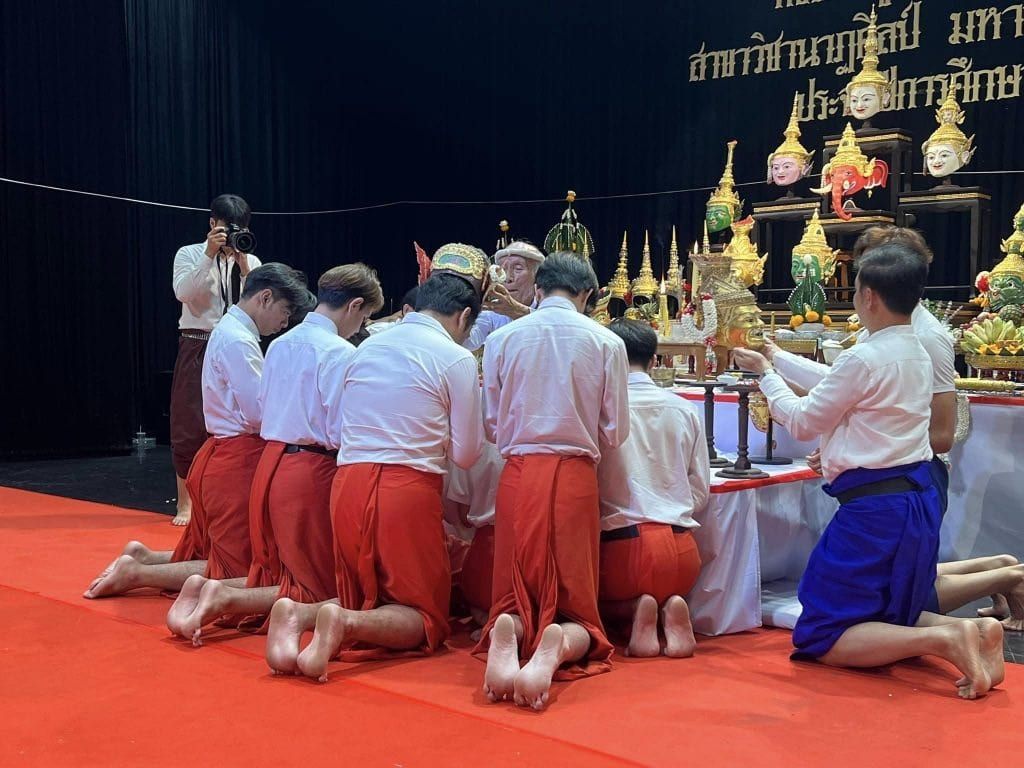
In many Thai traditional arts and spiritual practices, one word appears again and again:
ครู — Khru.
Teacher.
But respect for teachers is not limited to religious traditions.
Muay Thai, classical dance, music, traditional medicine, craftsmanship, and Sak Yant all place great importance on teachers and lineage.
Why?
Because historically, much traditional knowledge was not learned from books.
A teacher taught a student.
The student practiced and learned over many years.
Eventually, the knowledge was passed to the next generation.
🪷 Lineage is more than technique Knowing how to copy a yantra does not necessarily mean understanding the tradition behind it.
Imitating a ceremony does not mean knowing why each step is performed.
Traditional knowledge may include ritual procedures, ethics, restrictions, oral teachings, history, symbolism, and an understanding of when a particular practice is — or is not — appropriate.
This is why paying respect to one’s teacher does not necessarily mean treating a human being as a god.
It means recognizing that:
Knowledge has a source.
Skills are transmitted.
Traditions survive because someone takes responsibility for teaching them.
This is also why ไหว้ครู (Wai Khru), the traditional act or ceremony of paying respect to teachers, remains important in many areas of Thai culture.
When we look at it this way, lineage is not merely about preserving mysterious knowledge.
It is about keeping a cultural thread from being broken.