Chanting, Sacred Water, Blessed Thread, and Offerings — What Do They Mean?
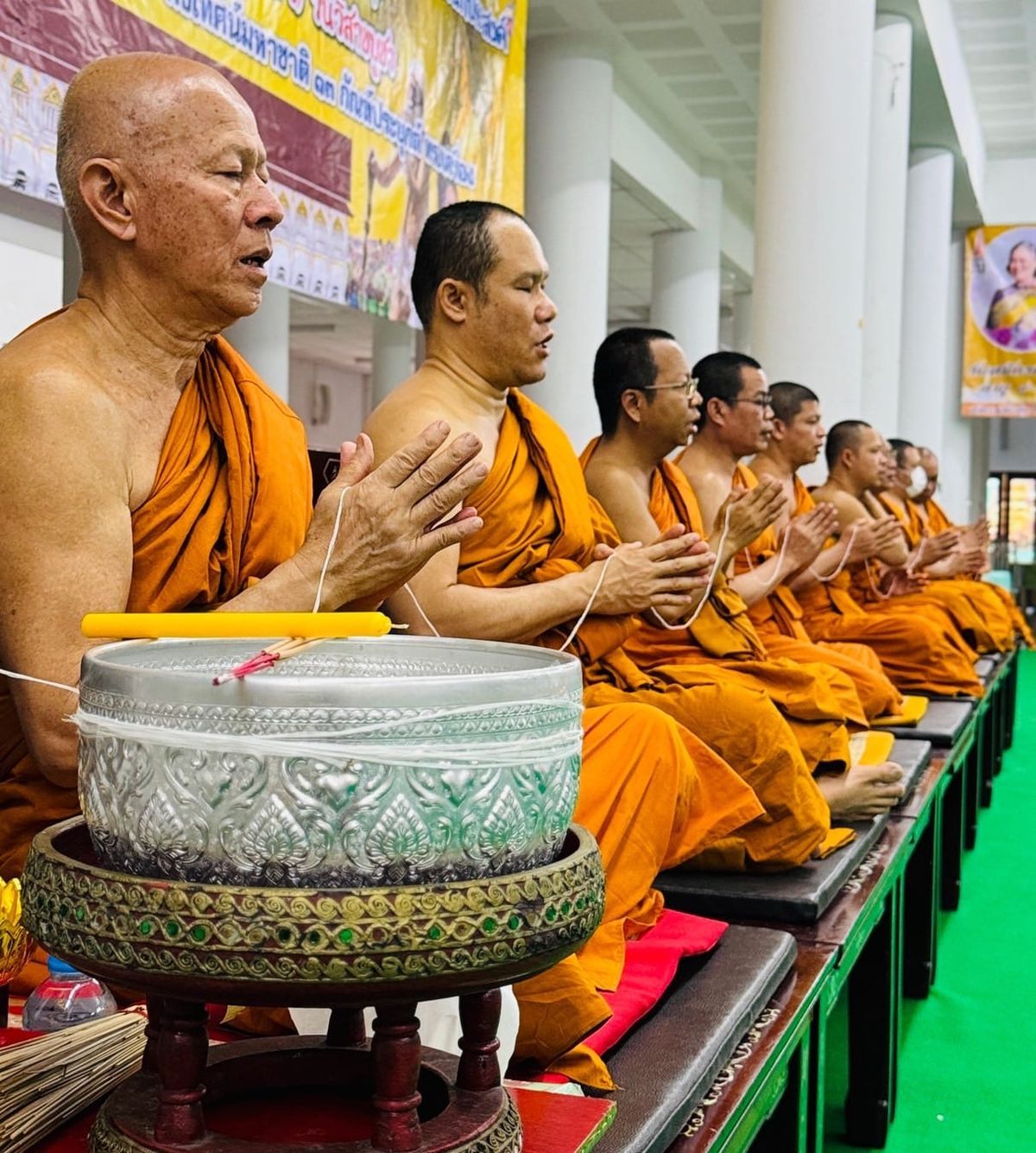
Visit a Thai temple and you may encounter several familiar elements:
Monks chanting, sacred water, white thread, flowers, candles, and other offerings.
Each has its own cultural meaning.
🪷 Chanting Chanting is an important part of Buddhist ceremonial life.
Different chants have different contexts and purposes, but they may involve recollection of Buddhist teachings, blessings, mindfulness, and wholesome aspirations.
🪷 Sacred Water — Nam Mon In Thai, blessed or sacred water is commonly called น้ำมนต์ (Nam Mon).
It is often prepared or blessed during chanting and ceremonial practice.
At the conclusion of some ceremonies, monks may sprinkle the water over participants as a traditional expression of blessing and auspiciousness.
🪷 Sacred Thread — Sai Sin The white sacred thread commonly seen in Thai ceremonies is called สายสิญจน์ (Sai Sin).
Depending on the ceremony, the thread may connect the Buddha image, ceremonial space, monks, or participants.
It symbolizes blessing, connection, and protection within the ritual tradition.
Blessed thread may also be tied around the wrist after a ceremony.
🪷 Offerings Different offerings carry different symbolic meanings.
Flowers remind us of beauty and impermanence.
Light represents wisdom and illumination.
Pure water represents clarity and purity.
Food may be offered to the Sangha as an act of generosity.
Other traditions may use additional items with their own specific meanings.
These objects should not simply be viewed as “magical tools.”
Their meaning comes from the wider combination of tradition, ritual, belief, intention, and cultural context.